
Post-tension Technology
Stronger SLabs. Fewer Joints. Better PLay.
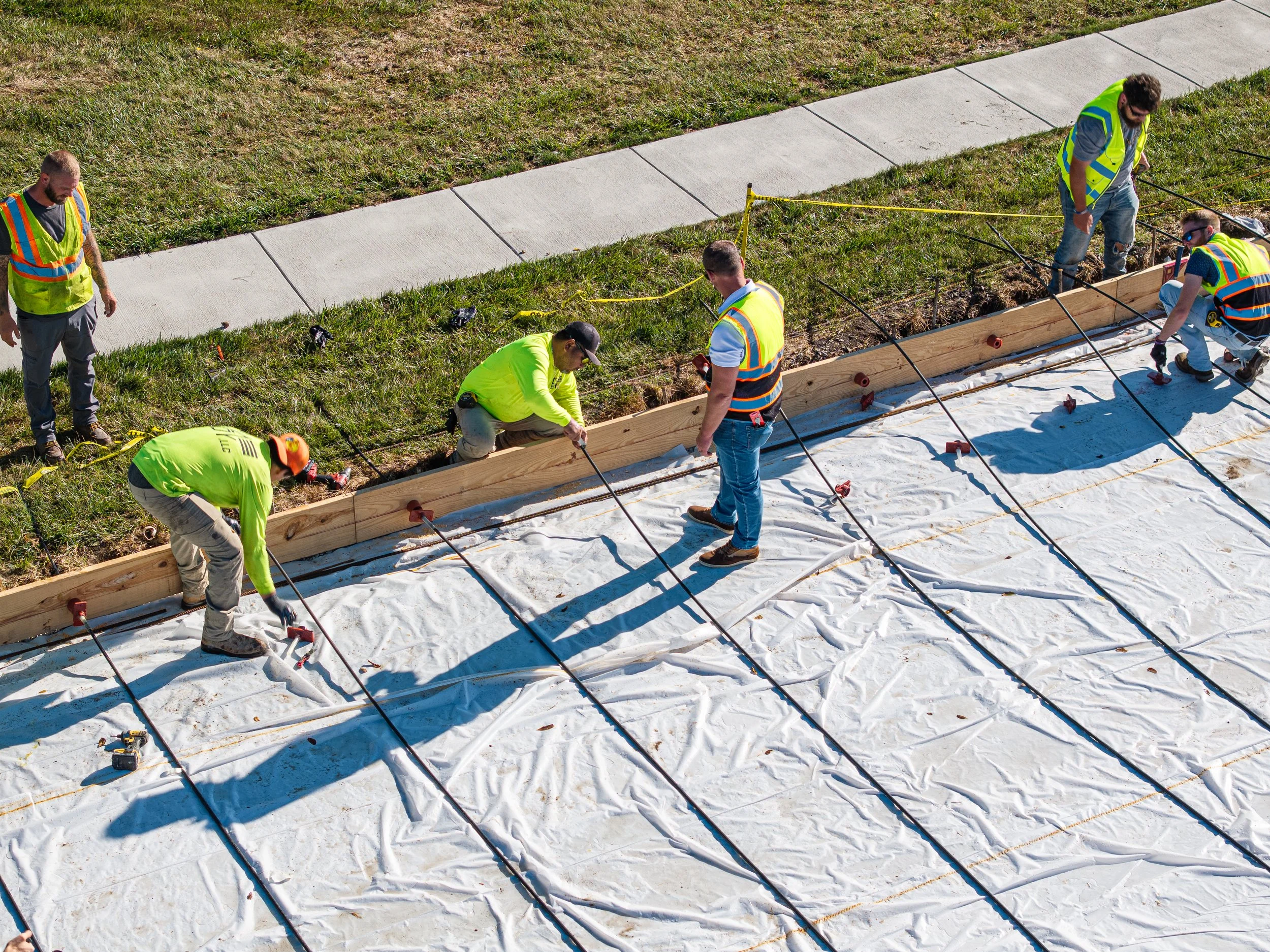
Post-tension (PT) concrete uses high-strength steel tendons that are tensioned after the concrete is poured and has gained sufficient strength, keeping the slab under compression—thereby reducing cracking, minimizing the number of required joints, and lowering long-term maintenance needs.
What Is Post-Tension Concrete?
PT slabs contain steel tendons inside protective sheathing. After the concrete reaches initial strength, tendons are stressed with hydraulic jacks and anchored at the slab edges. The resulting compression:
Controls shrinkage cracking
Improves slab performance on variable soils
Allows thinner sections (engineering-dependent)
Creates flatter, more consistent surfaces
(For outdoor courts, we typically use unbonded PT tendons designed for slabs-on-ground.)
Why PT Is Ideal for Sport Courts
Game consistency – flatter slab = reliable ball response and line accuracy
Fewer control joints – fewer seams telegraphing through coatings/lines
Durability – better resistance to environmental movement and edge curling
Lifecycle value – less crack repair, fewer surface touch-ups over time
How We Build a PT Slab (Simplified)
Engineering & Layout – tendon spacing/edge anchors, slab thickness, slopes, and drain plan
Subgrade & Base – well-compacted, drainage-first preparation
Place & Finish Concrete – finish to sport flatness targets
Initial Cure – reach specified strength for stressing
Stressing – apply specified force to each tendon; record elongations/PSI
Finish System – coatings and striping installed over a stable, uniform surface
Quality & Safety
Stressing Records: we document tendon count, elongations, and pressures
Edge Safety: protected anchor pockets and caps
Inspection & Testing: as required by the engineer/authority having jurisdiction
Maintenance Guidance: joint/sealant details, coating care, and seasonal tips
When PT May Not Be Required
Small, lightly-loaded practice areas or indoor slabs on excellent subgrade may perform well with conventional reinforcement. We’ll advise case-by-case.